The promise of private label is simple: your name on a product someone else already knows how to make. The reality is a sequence of small decisions — vessel, scent, label, box, paperwork — that either stay on schedule or quietly add three weeks.
Here is how a first private-label run actually comes together, based on what we do for brands shipping into the EU.
Week 1 — Decide what is genuinely yours
Private label is not an all-or-nothing choice. At low MOQ you customise the parts a customer sees and touches: the label artwork, the box, the reed colour, the neck finish, sometimes the vessel colour if it is a stock shape in your supplier's range. What you usually do not change at that volume is the fragrance formula itself — reformulating a concentrate has safety and documentation consequences that only make sense at scale.
That constraint is not a limitation if your brand is built on a point of view rather than a secret recipe. Our own line uses one signature scent, Iris & Orris, across the vessel and the refill. The identity comes from the story, the material and the restraint — not from twelve competing fragrances.
Week 2 — Sample the real thing
Ask for a sample of the exact SKU with a proof of your label on it. Not a generic bottle from the catalogue, not a digital mockup. You are checking three things at once: how the scent behaves in a room, how the label reads on the actual glass, and whether the reeds draw at the right speed. A sample that arrives in a plain vessel tells you almost nothing about the product you will sell.
A label looks different on glass. Always proof on the vessel, never on the screen.
Week 3 — Lock the artwork and the paperwork
This is the week most delays happen. Your label is not only a design object; in the EU it is a legal document. It has to carry the CLP allergen declaration where required, the product name, the net volume, the batch or expiry reference, and the address of the responsible economic operator. If you are selling under your own brand in the EU, that operator is you or an appointed party — the rule has applied since 13 December 2024 under GPSR.
We supply the compliance artwork as an editable layer with the allergen text already set, plus the IFRA certificate for the concentrate and the REACH statement. Your designer works inside that frame. It removes the single most common cause of a rejected print run. Full file list on our certifications page.
Weeks 4–5 — Production and checks
With artwork signed off, production is usually the predictable part. Filling, reed insertion, label application and box packing are short runs for an established factory. Ask your supplier what their batch check looks like: a scent-profile reference, a fill-volume tolerance and a leak test are the minimum. You want to know what happens if a batch drifts before you find out from a customer review.
For a stock vessel with your label, plan on a minimum in the hundreds rather than thousands. That is enough to launch into a handful of shops or a single market without tying up your first quarter's cash. Custom moulds and printed boxes move the minimum into the thousands — a decision for a second run, once you know the sell-through.
Week 6 — Ship, land, list
Freight to the EU and clearance add their own clock. A DDP quote, delivered duty paid to 27 EU countries, collapses several steps into one and keeps unexpected charges off your doorstep. While the stock is moving, the product photography, listing copy and onboarding material for your retailers should already be done.
Six weeks is a realistic first run when the artwork and compliance are ready in week three. It becomes ten when a label is redesigned after the first print proof. The difference is almost never the factory.
Build the second sale into the first
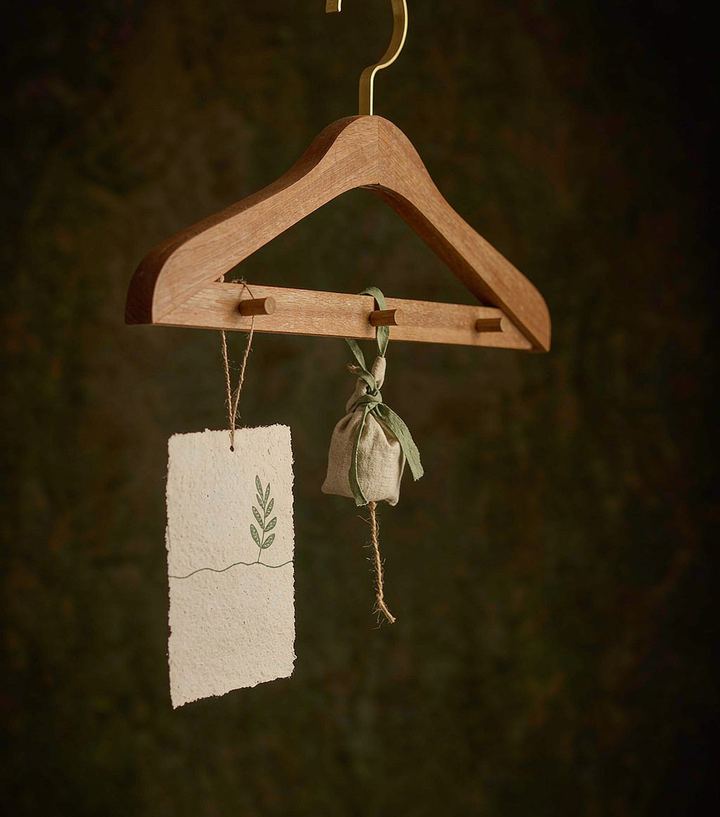
The strongest private-label decision you can make at the start is to specify the refill at the same time as the vessel. A refill in the identical scent turns a one-off purchase into a twice-yearly habit, and it costs you nothing extra in brand-building. If your line will include other formats — sachets, hanging cards, cedar blocks — ask whether the scent can carry across them. One signature scent across several formats reads as a brand; six unrelated scents read as a catalogue.
Our private-label page sets out what can be customised at each MOQ tier. Send us your label files and target market and we will tell you exactly what can ship in six weeks.